
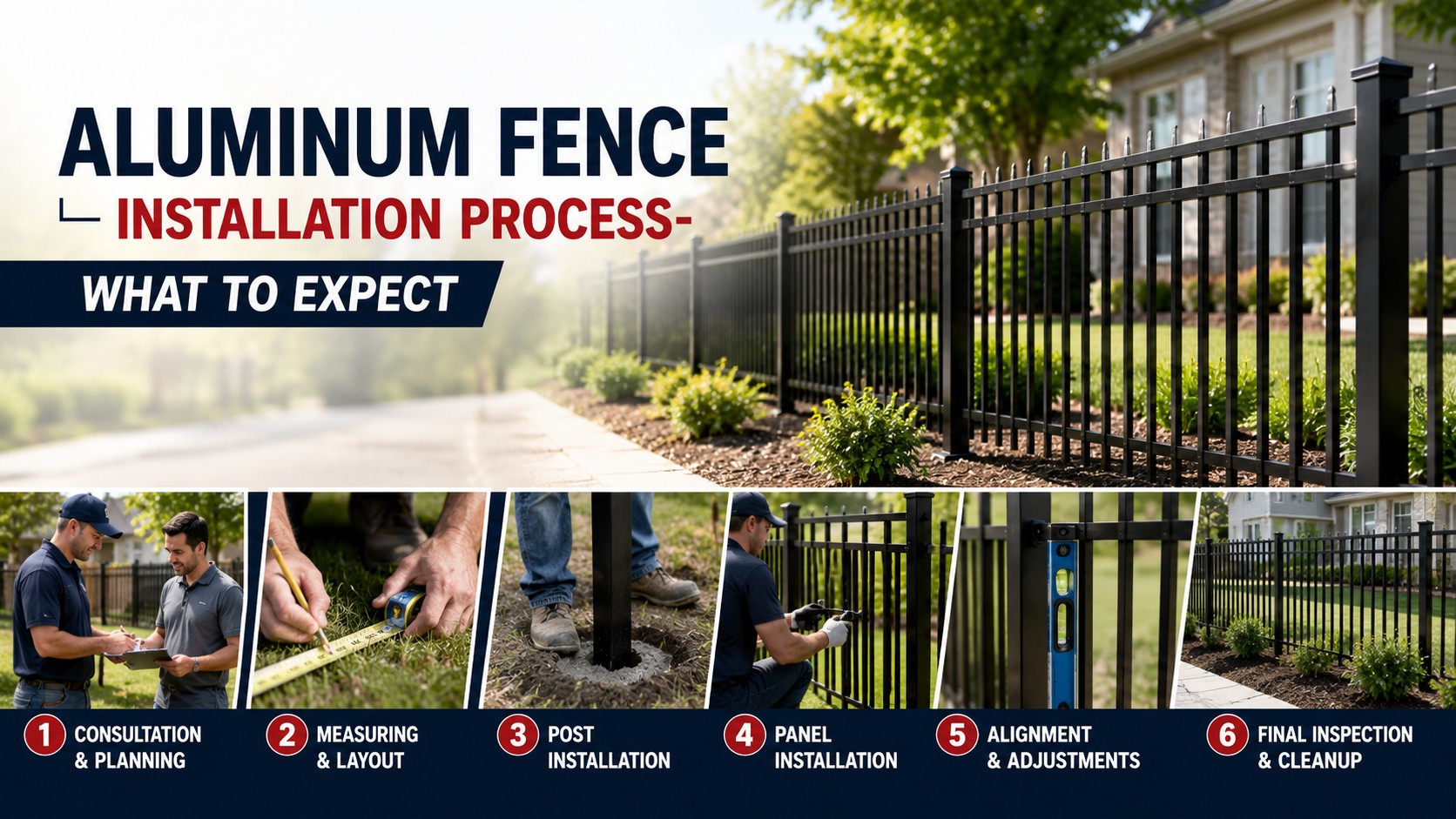
If you’re considering an aluminum fence installation for your home or business, knowing what happens from start to finish can help you plan ahead and set realistic expectations. Aluminum fencing is a popular choice for its durability, low maintenance, and clean aesthetic, but like any fencing project, the installation process involves several key steps to ensure it’s done correctly and built to last.
Here’s a complete breakdown of the aluminum fence installation process, from initial consultation to final walkthrough.
Step 1: Initial Consultation and Site Assessment
The process typically begins with a consultation where a aluminum fence contractor visits your property to assess the yard, discuss your goals, and take initial measurements. This is the stage where factors like slope, soil conditions, existing landscaping, and property lines are evaluated, since these can all impact installation and pricing. It’s also the time to discuss style preferences, fence height, and whether the fence is for privacy, security, pool safety, or purely decorative purposes.
Step 2: Property Survey and Measurements
Before installation begins, an accurate property survey is essential to confirm boundary lines and avoid disputes with neighbors. Precise measurements are taken to determine how many aluminum fence panels and aluminum fence posts will be needed, along with the layout for gates and corners. Skipping this step is one of the most common causes of costly mistakes, such as fences that encroach on a neighbor’s property or don’t align properly with existing structures.
Step 3: Permits and Utility Locates
Depending on your city or HOA, a permit may be required before installation can begin. Your contractor should handle this process or clearly explain what’s needed on your end. Just as important is scheduling a utility locate to mark any underground lines, such as gas, water, or electrical, so post holes can be dug safely without damaging infrastructure.
Step 4: Material Selection and Ordering
Once measurements and permits are finalized, it’s time to select the specific style, height, and color of your aluminum fence. Aluminum fencing comes in a range of designs, from simple picket-style panels to more ornamental options that mimic the look of wrought iron at a lower cost and with far less maintenance. After selection, materials are ordered and prepared for installation.
Step 5: Post Installation
Installation begins with setting the fence posts, which form the structural foundation of the entire fence. Posts are typically set in concrete at consistent intervals and depths to ensure stability and prevent shifting over time. Proper post spacing and depth are critical, since improperly set posts are one of the leading causes of fence failure down the road, regardless of how strong the panels themselves are.
Step 6: Panel Attachment
Once the posts are set and the concrete has cured, the aluminum fence panels are attached between posts. Aluminum panels are lightweight compared to materials like wrought iron or steel, which often allows for a faster, more efficient installation process while still delivering excellent strength and durability once secured.
Step 7: Gate Installation and Hardware
Gates are installed next, along with hinges, latches, and any additional hardware such as self-closing mechanisms, which are often required for pool fencing to meet safety codes. Gates should be tested at this stage to confirm smooth operation and proper alignment before the project is considered complete.
Step 8: Final Walkthrough and Cleanup
The last step involves a final walkthrough with your contractor to inspect the completed fence, confirm everything matches the agreed-upon specifications, and address any last-minute adjustments. A professional crew will also clear away debris, packaging, and leftover materials, leaving your property clean and the fence ready for immediate use.
How Long Does Aluminum Fence Installation Take?
The aluminum fence timeline varies depending on property size, terrain, and the complexity of the layout, but most residential installations are completed within a few days once materials are on-site. Larger commercial properties or projects with multiple gates and custom features may take longer. Weather, particularly Houston’s rainy season, can also affect scheduling, so it’s worth discussing potential delays with your contractor upfront.
What Affects Aluminum Fence Installation Cost
Several factors influence aluminum fence installation cost, including the total linear footage, fence height, style complexity, number of gates, and site conditions such as slope or soil type. Ornamental or taller aluminum fencing typically costs more than basic picket-style designs. While aluminum tends to cost more upfront than chain link, its minimal long-term maintenance often makes it a more cost-effective choice for low maintenance fencing over the life of the fence.
Why Aluminum Is a Popular Choice for Homeowners
Aluminum fencing has become increasingly popular for both residential aluminum fence and commercial aluminum fence projects because it combines strength, style, and minimal upkeep. Unlike wood, it never needs staining or sealing, and unlike steel or wrought iron, it won’t rust, which makes it especially well-suited to Houston’s humid climate. It’s also a common choice for aluminum fence for pools, since many styles meet safety code requirements while still allowing an open, attractive view of the yard.
Preparing Your Property Before Installation Day
A little preparation on your end can help the installation process go more smoothly. Clearing the fence line of furniture, landscaping equipment, potted plants, or other obstacles gives the crew clear access to work efficiently. It’s also a good idea to notify any pets or family members about the work schedule and to trim back overgrown vegetation along the property line if needed. Taking these small steps before the crew arrives can help avoid unnecessary delays and ensure the entire process, from post-hole digging to final panel installation, stays on schedule.
Get a Professional Aluminum Fence Installation
At Ayms Fence, we handle every step of the aluminum fence installation process, from initial consultation and permitting to final walkthrough, for homeowners and businesses across the Greater Houston area. Contact us today for a detailed estimate and see why aluminum fencing continues to be one of our most requested options.
Frequently Asked Questions
- How long does aluminum fence installation typically take? Most residential aluminum fence installations are completed within a few days, depending on property size, layout complexity, and weather conditions.
- Do I need a permit to install an aluminum fence? Permit requirements vary by city and HOA, so it’s best to check local regulations or ask your contractor to confirm what’s needed before installation begins.
- How much does aluminum fence installation cost? Cost depends on factors like linear footage, fence height, style, number of gates, and site conditions, so it’s best to get a detailed, itemized estimate.
- Is aluminum fencing a good option for pool areas? Yes, many aluminum fence styles meet pool safety code requirements, including self-closing gates, while still providing an open, attractive view of the yard.
- Does aluminum fencing require much maintenance after installation? No, aluminum fencing is virtually maintenance-free and doesn’t require painting, staining, or sealing like wood fencing does.
- Can aluminum fencing be installed on sloped or uneven yards? Yes, aluminum fencing can typically be adapted to sloped terrain through techniques like racking or stepping the panels along the incline.
- How deep are aluminum fence posts typically set? Post depth depends on fence height and soil conditions, but posts are generally set in concrete to a depth sufficient to ensure long-term stability.
- Will weather delay my aluminum fence installation? Rain or extreme weather can occasionally delay installation, particularly in Houston’s rainy season, so it’s a good idea to discuss potential scheduling flexibility with your contractor.
- Can I customize the color and style of my aluminum fence? Yes, aluminum fencing is available in multiple styles and finishes, allowing homeowners to choose options that match their home’s aesthetic.
- How long does an aluminum fence typically last? With minimal maintenance required, aluminum fencing often lasts several decades without rusting, warping, or requiring major repairs.