
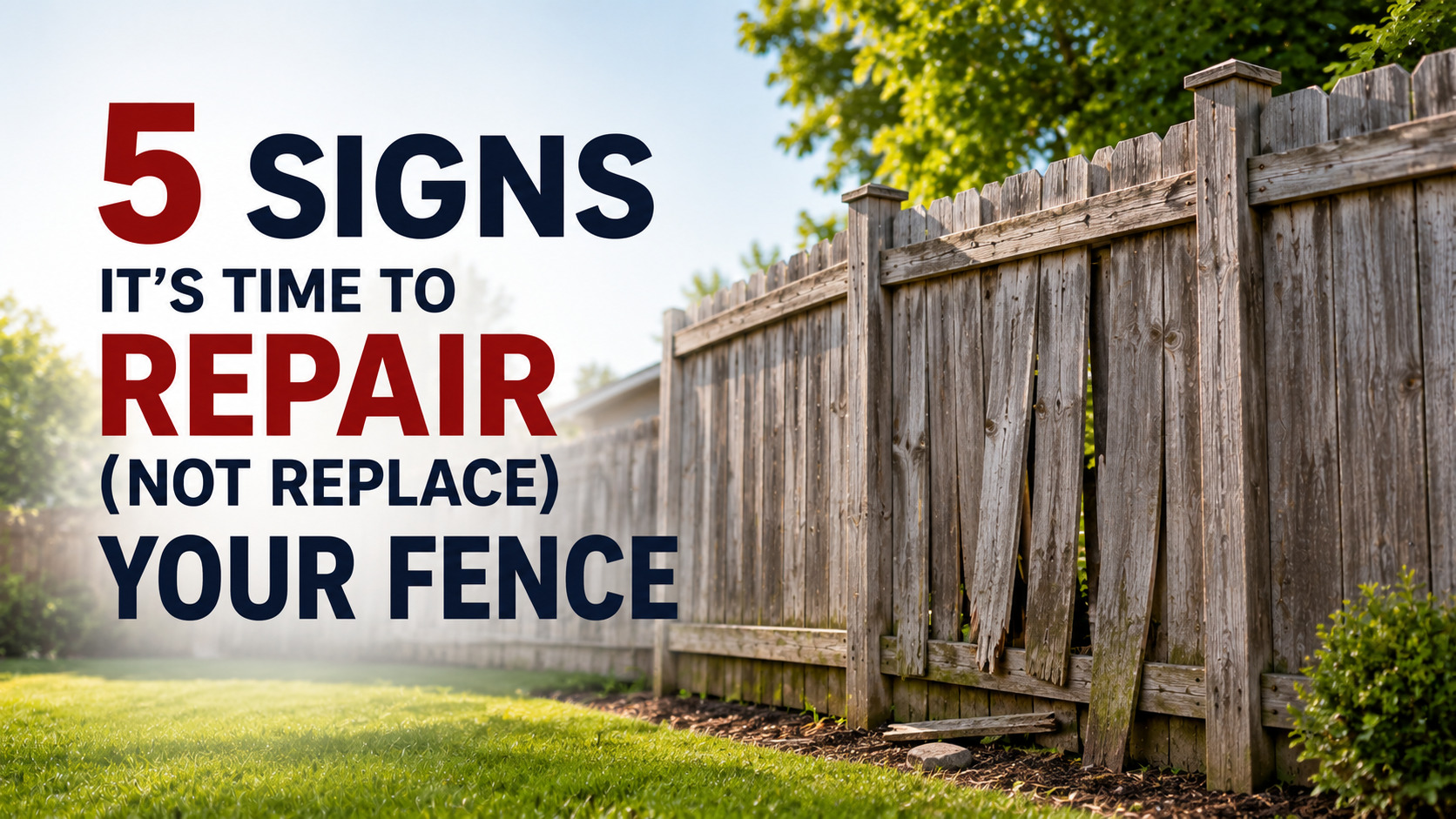
A damaged or aging fence can leave homeowners wondering whether it’s time to call in a professional for fence repair or start budgeting for a full replacement. Replacing an entire fence is a much bigger investment than repairing damaged sections, so knowing the difference can save you significant money, especially when the underlying structure is still sound. In many cases, targeted repairs can restore both the function and appearance of a fence without the cost and disruption of a full replacement.
Here are 5 clear signs it’s time for fence repair, not a full teardown and rebuild.
1- Only a Few Sections Are Damaged
If most of your fence is structurally sound but you’re dealing with a handful of damaged boards, a bent panel, or a section of chain link mesh that’s come loose, repair is almost always the more cost-effective option. Localized damage from storms, fallen branches, or general wear doesn’t necessarily mean the entire fence needs to go. A qualified fence contractor Houston homeowners trust can assess whether the damaged sections can be patched, replaced individually, or reinforced without touching the rest of the structure.
2- The Fence Posts Are Still Solid
Fence posts are the backbone of any fencing system, and their condition is one of the biggest factors in the repair-vs-replace decision. If your posts are still firmly set, free of significant rot, and not leaning or shifting in the ground, that’s a strong sign the fence’s foundation is intact. A leaning fence fix or minor post reinforcement is often all that’s needed when the posts themselves are healthy, even if panels or pickets above ground show wear.
3- The Damage Is Cosmetic, Not Structural
Fading paint, minor scratches, small rust spots, or a few loose nails are typically cosmetic issues rather than signs of structural failure. These types of surface-level problems can usually be addressed through cleaning, staining, or minor hardware fixes rather than a full rebuild. Before assuming the worst, it’s worth scheduling a professional fence inspection to distinguish between damage that affects the fence’s stability and damage that’s simply an eyesore.
4- The Fence Is Less Than 10-15 Years Old
Age matters when weighing repair versus replacement. A well-built wood or chain link fence typically has a lifespan of 15-20 years with proper care. If your fence is still within that window and hasn’t experienced widespread rot, rust, or structural failure, affordable fence repair is almost always the smarter financial choice over starting from scratch. Replacement becomes more worthwhile once a fence approaches or exceeds its expected lifespan and repairs start becoming frequent and costly.
5- Storm Damage Is Isolated to One Area
Houston’s storm season can cause real damage to fencing, from wind-bent panels to fallen tree limbs. However, storm damaged fence issues are often concentrated in one section rather than spread across the entire perimeter. If only one side of your property was affected, repairing that specific area is typically far more economical than replacing the whole fence line. A professional assessment after a storm can confirm whether the surrounding sections remain structurally sound.
When Replacement Makes More Sense
While repair is often the right call, there are situations where replacement is the smarter long-term investment. Widespread rot, multiple leaning or broken posts, extensive rust throughout a chain link fence repair project, or a fence that’s simply reached the end of its expected lifespan are all signs that patchwork repairs will only be a short-term fix. In these cases, continuing to sink money into repairs on an aging or heavily damaged fence often ends up costing more over time than a single, well-planned replacement.
It’s also worth considering how frequently repairs are needed. If you find yourself calling for wood fence repair or fence restoration multiple times within a year or two, that pattern itself is a signal that the underlying materials or original installation may be compromised. A one-time repair after a storm or accident is very different from ongoing, recurring issues that keep resurfacing in the same areas. Tracking how often and where problems occur can help you and your contractor make a more informed, data-driven decision rather than reacting to each issue individually.
Regular fence maintenance tips, such as periodic inspections, prompt attention to loose hardware, and resealing wood surfaces on schedule, can also extend the life of a fence and reduce how often repair becomes necessary in the first place. Investing a small amount of time in preventive care each year often pays for itself by delaying the need for major repairs or full replacement, keeping both your budget and your property’s curb appeal intact for longer.
Get a Professional Fence Assessment
Not sure whether your fence needs repair or replacement? The team at Ayms Fence provides honest, professional fence inspections throughout the Greater Houston area to help you make the right call. Whether it’s a quick repair or a full rebuild, we’ll walk you through your options and provide a clear, upfront estimate. Contact us today to schedule an assessment.
Frequently Asked Questions
- How do I know if my fence needs repair or replacement?
Signs like isolated damage, solid fence posts, cosmetic wear, and a fence under 15 years old usually point to repair, while widespread rot, multiple leaning posts, or extensive age point to replacement. - How much does fence repair typically cost compared to replacement?
Fence repair is generally significantly less expensive than full replacement since it addresses specific damaged sections rather than rebuilding the entire structure. - Can a leaning fence be fixed without full replacement?
In many cases, yes. If the post itself isn’t rotted, it can often be reset, reinforced, or replaced individually without needing to rebuild the surrounding fence line. - How often should I inspect my fence for damage?
It’s a good idea to inspect your fence at least twice a year and after any major storm to catch minor issues before they become bigger, more expensive problems. - Is it worth repairing a chain link fence?
Yes, chain link fences are often very repairable, especially issues like loose mesh, bent poles, or damaged sections, which can typically be fixed without replacing the entire fence. - What are common signs of a failing fence post?
Common signs include visible leaning, wobbling when pushed, cracks at the base, or wood that feels soft and spongy due to rot. - Does homeowners insurance cover fence repair after a storm?
Coverage varies by policy, so it’s best to check with your insurance provider, but many policies do cover storm-related fence damage under certain conditions. - How long does a typical fence repair take?
Most localized fence repairs can be completed within a day or two, depending on the extent of the damage and material availability. - Can wood fence repair match the existing fence’s appearance?
A skilled contractor can typically match wood type, stain color, and style closely, though slight variations may occur due to natural weathering of the existing sections. - When should I stop repairing and just replace my fence?
If repairs are becoming frequent, costly, or the fence has widespread structural issues across multiple sections, replacement is usually the more practical long-term solution.