If you have been shopping for fencing and encountered both the terms “chain link fence” and “cyclone fence,” you may have stopped and wondered whether these are actually two different products or just two names for the same thing. The confusion is extremely common and completely understandable. This guide clears up the difference once and for all and helps you make the most informed fencing decision for your property.
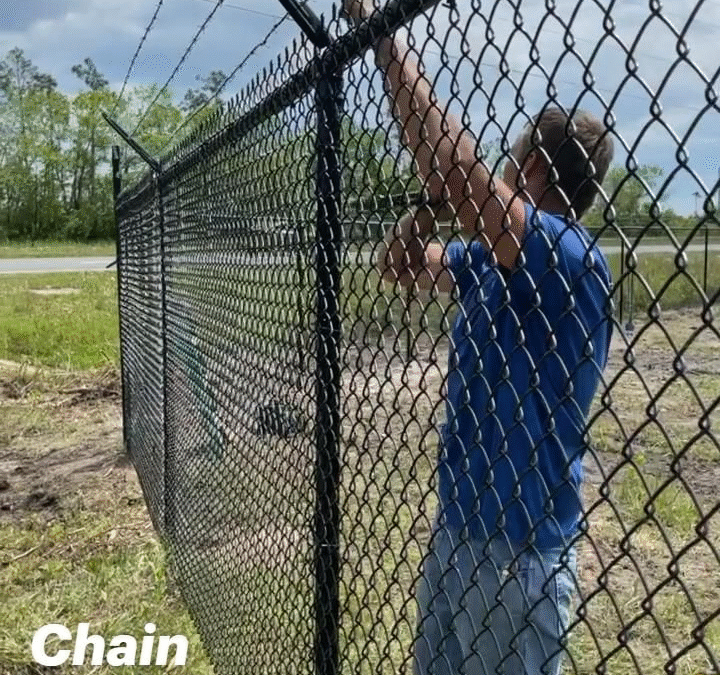
A chain link fence and a cyclone fence are the same product. The term “cyclone fence” is simply a regional or colloquial name for chain link fencing. Both refer to the same woven wire mesh material made from galvanized or coated steel wire twisted into a diamond pattern and stretched between steel posts. The names are used interchangeably across different parts of the United States and the world.
Why Do People Use Two Different Names for the Same Fence?
The name “cyclone fence” actually has historical roots. Cyclone Fence was a brand name trademarked by a specific American fencing manufacturer in the early twentieth century. Much like how people say “Band-Aid” instead of “adhesive bandage” or “Thermos” instead of “insulated flask,” the brand name eventually became so widely used that it became a generic term for the product category itself.
Over time, people in different regions adopted different names. In many parts of the American South and Midwest, “cyclone fence” is still the dominant term. In urban and commercial environments, “chain link” is more commonly used. In Australia and parts of the United Kingdom, the same product is often called “cyclone wire” or “hurricane fencing.”
So if you search for chain link fencing and someone quotes you on cyclone fencing, or vice versa, you are looking at the exact same product. There is no technical distinction between the two.
What Is Chain Link Fencing Made From?
Understanding the materials behind chain link fencing helps you make a smarter buying decision, regardless of what name your local supplier uses.
Chain link fencing consists of three primary components:
- Wire fabric: A continuous length of galvanized or vinyl-coated steel wire woven into interlocking diamond shapes. The wire gauge, typically ranging from 11.5 to 6 gauge, determines the fence’s strength and weight.
- Framework: Includes terminal posts at corners and ends, line posts along the fence run, and top rails that run horizontally to support the fabric.
- Hardware: Tension bars, tension bands, brace bands, rail ends, post caps, and tie wires that hold the entire assembly together securely.
The wire fabric is the most visible part of the fence and the component most people refer to when they picture a chain link or cyclone fence in their mind.
What Are the Main Types of Chain Link Fencing Available?
Not all chain link fencing is identical. There are several variations based on coating, gauge, and mesh opening size, and choosing the right specification matters for your intended use.
| Specification | Options Available | Best Application |
|---|---|---|
| Wire Coating | Galvanized, vinyl-coated (black, green, brown) | Galvanized for utility; vinyl-coated for aesthetics |
| Wire Gauge | 6, 9, 11, 11.5 gauge | Heavier gauge for security; lighter for residential |
| Mesh Opening | 1 inch, 1.75 inch, 2 inch, 2.375 inch | Smaller openings for animal containment or security |
| Fence Height | 3 ft, 4 ft, 5 ft, 6 ft, 8 ft, 10 ft, 12 ft | Residential uses 4 to 6 ft; commercial uses 8 to 12 ft |
| Post Material | Galvanized steel, aluminum | Steel for strength; aluminum for corrosion resistance |
Choosing the right combination of these specifications depends on whether you are enclosing a backyard, securing a commercial property, containing animals, or protecting a construction site.
How Does Chain Link Fencing Compare to Other Common Fence Types?
When homeowners and business owners are deciding between fencing options, chain link fencing is frequently compared to wood, vinyl, and aluminum alternatives. Here is how it stacks up across the most important categories.
| Feature | Chain Link | Wood | Vinyl | Aluminum |
|---|---|---|---|---|
| Upfront Cost | Low | Low to Medium | Medium to High | Medium to High |
| Lifespan | 15 to 20 years | 10 to 15 years | 20 to 30 years | 30 or more years |
| Maintenance Required | Very Low | High | Very Low | Very Low |
| Privacy Level | None (open mesh) | High | High | Low to Medium |
| Security Level | Medium to High | Low to Medium | Low | Medium |
| Installation Complexity | Medium | Medium to High | Medium | Medium |
| Aesthetic Appeal | Utilitarian | High | High | High |
Chain link fencing wins clearly on cost and low maintenance. For applications where privacy is not a requirement, such as athletic fields, school perimeters, dog runs, and utility areas, it is often the most practical choice available.
What Are the Most Common Uses for Chain Link Fencing?
Chain link fencing is one of the most versatile fencing materials in existence. Its combination of affordability, durability, and visibility makes it appropriate for a wide range of residential, commercial, and industrial applications.
Why Do Residential Homeowners Choose Chain Link Fencing?
Residential homeowners frequently choose chain link fencing for:
- Backyard boundary definition without the cost of wood or vinyl
- Dog runs and pet enclosures where visibility and ventilation matter
- Garden protection to keep wildlife away from vegetable beds
- Pool fencing where local codes require a perimeter barrier but privacy is not a concern
- Front yard fencing where an open, unobtrusive look is preferred
In many neighborhoods, a black vinyl-coated chain link fence blends into the landscape so naturally that it barely registers as a fence at all. This is particularly useful for homeowners who want a secure boundary without visually dividing their yard from the street.
Why Do Businesses and Contractors Prefer Chain Link Fencing?
For commercial and industrial applications, chain link fencing is frequently the first choice because of its cost efficiency at scale and its proven security performance. Common business applications include:
- Construction site perimeters that require temporary or permanent security fencing
- School and athletic facility boundaries where supervision and visibility are priorities
- Warehousing and storage yard perimeters
- Government and municipal facilities
- Utility and infrastructure protection
A well-installed commercial-grade chain link fence with a heavier wire gauge and a barbed wire or razor ribbon topping provides a highly effective security barrier that is also easy to inspect and maintain.
How Is Chain Link Fencing Installed?
Installing chain link fencing follows a logical sequence that most experienced DIYers can handle on smaller residential projects. For commercial applications or larger perimeters, professional installation is strongly recommended.
What Are the Basic Steps for Chain Link Fence Installation?
- Mark your fence line using stakes and a string to establish a straight, accurate layout
- Call 811 before digging to confirm there are no underground utilities in your fence path
- Set terminal posts at all corners, ends, and gate openings using concrete and allow a full 24 to 48 hours to cure
- Set line posts between terminal posts at intervals of up to 10 feet on center
- Attach the top rail between all posts using rail ends and brace bands
- Unroll the wire fabric along the fence and attach it to the first terminal post using tension bars and bands
- Pull the fabric taut using a come-along or fence stretcher tool and attach to the opposite terminal post
- Secure the fabric to line posts and the top rail using tie wires placed every 12 to 24 inches
- Install gates and adjust hardware to ensure smooth operation and proper alignment
The most common installation mistakes involve setting posts without adequate concrete, failing to pull the fabric tight enough, and spacing tie wires too far apart. Each of these errors causes the fence to sag or shift over time.
How Long Does a Chain Link Fence Last?
A properly installed chain link fence with galvanized coating typically lasts between 15 and 20 years under normal residential conditions. Vinyl-coated versions often last longer because the coating provides an additional layer of protection against moisture and UV degradation.
Several factors influence how long your chain link fence will last:
- Post depth: Posts set too shallow shift in freeze-thaw cycles and shorten fence life significantly
- Concrete curing: Rushing post setting leads to posts that lean over time
- Coating quality: Higher-grade galvanization or thicker vinyl coating extends lifespan
- Climate exposure: Coastal salt air and extreme temperature swings accelerate corrosion on lower-grade wire
- Physical stress: Impact from vehicles, heavy snow loads, or repeated force all reduce lifespan
With minimal maintenance, which mainly involves inspecting hardware annually and treating any exposed wire ends with a rust-inhibiting coating, a quality chain link fence provides reliable service for many years beyond its average lifespan.
Frequently Asked Questions About Chain Link and Cyclone Fencing
Is a cyclone fence the same as a chain link fence?
Yes, absolutely. A cyclone fence and a chain link fence are the same product. “Cyclone fence” originated as a brand name that became a generic regional term over time. Both names describe the same woven diamond-pattern wire mesh fencing stretched between steel posts.
How much does chain link fencing cost per linear foot?
The cost of chain link fencing typically ranges from 8 to 40 dollars per linear foot installed, depending on the wire gauge, fence height, coating type, and local labor rates. Basic residential galvanized fencing at standard heights is on the lower end, while heavy-gauge commercial fencing with vinyl coating and barbed wire topping sits at the higher end.
What gauge chain link fence is best for a residential backyard?
For a standard residential backyard, an 11 or 11.5 gauge chain link fabric is the most common and cost-effective choice. If you have large dogs or need stronger security, stepping up to a 9 gauge wire provides noticeably better resistance to bending and impact.
Can you add privacy slats to a chain link fence?
Yes. Privacy slats are available in a range of materials including aluminum, steel, and polypropylene and can be woven directly into the chain link fabric to add varying degrees of visual screening. Full slat coverage can block up to 90 percent of the view through the fence while still maintaining the structure’s integrity.
How do you keep a chain link fence from rusting?
The best way to prevent rust on a chain link fence is to choose vinyl-coated wire rather than bare galvanized wire, especially in humid or coastal environments. For galvanized fencing already installed, inspect the wire annually and apply a rust-inhibiting spray to any areas where the coating has been scratched or worn through. Keeping vegetation away from the fence line also reduces moisture retention against the wire.
What is the maximum height for a residential chain link fence?
Most residential zoning codes allow chain link fences up to six feet in the backyard and four feet in the front yard, though these limits vary by municipality. Some areas require a permit for any fence over a certain height. Always check with your local zoning office or homeowners association before installation to confirm the regulations in your area.
Is chain link fencing a good option for a dog enclosure?
Chain link fencing is one of the most popular and practical choices for dog enclosures. It is strong enough to contain most breeds, allows full visibility for supervision, provides ventilation, and can be installed at heights tall enough to prevent jumping. For escape-prone dogs, consider a fence with a smaller mesh opening to prevent paw-hold climbing, or add a coyote roller or lean-in extension to the top.
Summary
Chain link fencing and cyclone fencing are the same product, just known by different names in different regions. Whether you grew up calling it one or the other, the material you are getting is identical: a woven diamond-pattern wire mesh fence that delivers durability, visibility, and affordability that no other fencing type can match at the same price point.
For residential use, it offers a low-cost, low-maintenance boundary solution that works especially well for pets and gardens. For commercial and industrial use, it provides scalable security at a fraction of the cost of solid fencing alternatives.