
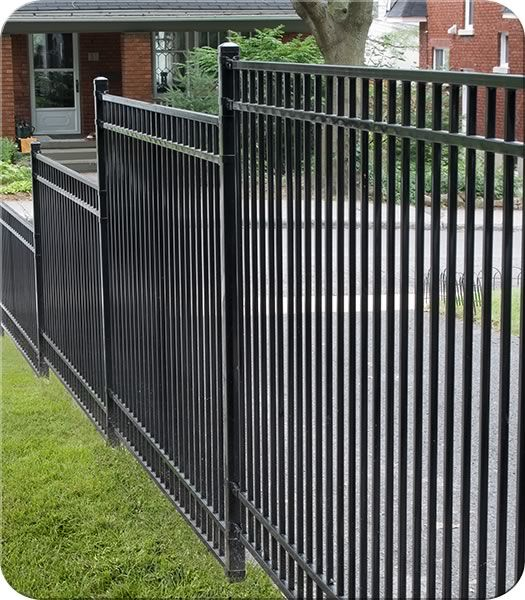
Chain link fence is better than wood when you need durability, low maintenance, and cost-effectiveness for large areas or security applications. Wood fencing is better when privacy and aesthetics are the priority. For most homeowners balancing budget, longevity, and practical performance, chain link fencing delivers significantly more value over its lifetime than wood.
Choosing a fence for your home is one of those decisions that looks simple from the outside but reveals real complexity the moment you start comparing your options. Two of the most common choices for residential properties are chain link fencing and wood fencing, and they sit at opposite ends of the spectrum in almost every meaningful way. One is built for performance, durability, and cost efficiency. The other is built for privacy and visual warmth.
This comparison will help you understand exactly how chain link fencing and wood fencing differ across the factors that matter most to homeowners: cost, durability, maintenance, security, privacy, and long-term value. By the end, you will know which option genuinely suits your property, your priorities, and your budget.
What Is Chain Link Fencing and How Does It Work?
A chain link fence is constructed from interlocked steel wire woven into a diamond pattern and stretched between steel posts set in concrete footings. The mesh is typically galvanized to resist rust and corrosion, and can also be coated in vinyl or polyester in colors including black, green, and brown to blend with different landscapes.
The structure of a chain link fence gives it exceptional strength across large spans without the need for closely spaced posts. The woven mesh distributes load and impact across the entire panel rather than concentrating stress at individual points, which is why chain link installations consistently outperform wood panels in high-wind areas and in situations where physical impact is a realistic concern.
What Are the Standard Specifications for Chain Link Fencing?
- Wire gauge: 11-gauge wire is the residential standard. 9-gauge and heavier options are available for commercial and high-security applications
- Post spacing: Typically 10 feet between line posts, with terminal posts at all corners, gates, and ends providing anchoring strength
- Height options: Standard residential heights range from 3 feet to 6 feet. Security installations can extend to 8 feet, 10 feet, or taller with optional barbed wire or razor wire topping
- Coating options: Hot-dip galvanized for maximum rust resistance, or vinyl-coated in black, green, brown, or grey for a more decorative finish
- Post material: Galvanized steel pipe set in concrete, sized to the fence height and intended loading conditions
What Are the Key Differences Between Chain Link and Wood Fencing?
Comparing chain link fencing and wood fencing side by side across the criteria that matter most to homeowners makes the decision much clearer. Here is a comprehensive comparison:
| Comparison Factor | Chain Link Fence | Wood Fence |
| Initial cost | Lower cost per linear foot | Higher cost per linear foot |
| Installation time | Faster, fewer components | Slower, more labor-intensive |
| Lifespan | 20 to 50 years with minimal care | 10 to 20 years with regular maintenance |
| Maintenance required | Very low, occasional inspection only | High, annual painting or staining needed |
| Privacy level | None without additions | Full privacy with solid board designs |
| Security strength | Very high, difficult to break through | Moderate, panels can be damaged or bypassed |
| Wind resistance | Excellent, wind passes through mesh | Poor, solid panels catch wind and can fail |
| Pest resistance | Completely resistant to insects and rot | Vulnerable to termites, rot, and fungal damage |
| Repair difficulty | Simple mesh replacement if damaged | Individual board or panel replacement |
| Appearance | Functional and utilitarian | Warm, traditional, and attractive |
| Customization | Limited colors and heights | Many styles, stains, and paint colors |
| Environmental impact | Steel is recyclable | Requires ongoing wood treatment chemicals |
This comparison shows that chain link fencing outperforms wood in nearly every practical category. Wood wins primarily on aesthetics and privacy, which are real and valid priorities for many homeowners, but they come at a significant long-term cost in maintenance time and expense.
How Much Does Chain Link Fencing Cost Compared to Wood Fencing?
Cost is one of the most significant factors in the chain link versus wood fencing decision, and the difference is more substantial than many homeowners realize when the full ownership period is taken into account.
What Is the Typical Cost Difference Between the Two Options?
- Chain link fence installation: Typically ranges from $8 to $18 per linear foot installed, depending on height, gauge, and coating type
- Wood fence installation: Typically ranges from $15 to $35 per linear foot installed, depending on wood species, style, and regional labor costs
- Chain link maintenance cost: Near zero over a 10-year period for a galvanized installation. Vinyl-coated versions may need occasional washing
- Wood maintenance cost: Annual staining or painting costs of $1 to $3 per linear foot, plus periodic board replacement as weathering and rot occur
Real-World Example: A homeowner with 200 linear feet of boundary to fence paid approximately $2,400 to install a galvanized chain link fence at $12 per linear foot. A neighbor on the same street chose pressure-treated wood fencing at $22 per linear foot, paying $4,400 upfront. Over the next ten years, the chain link owner spent approximately $200 on occasional repairs. The wood fence owner spent an additional $4,000 on painting, board replacements, and one full panel rebuild after a wind storm. Total ten-year cost: chain link $2,600 versus wood $8,400. The chain link fence was still in excellent condition. The wood fence was showing its age.
Why Is Chain Link Fencing Often the Better Choice for Security?
Security is an area where the physical properties of a chain link fence create a measurable advantage over wood. Understanding exactly why helps homeowners make a decision based on realistic security outcomes rather than assumptions.
- Structural integrity: The interlocked steel mesh of a chain link fence is significantly harder to break through than wood panels, which can be kicked in, sawed, or pried apart
- Visibility as a deterrent: The open mesh design allows full visibility on both sides. This means no hidden approaches to your property and no concealment for intruders operating near the fence line
- Height and topping options: Chain link can be installed at 8 feet or more and fitted with barbed wire, razor wire, or anti-climb mesh for applications where security is a primary concern
- No weak points from weathering: Wood fences develop weak points over time as posts rot, panels warp, and nails loosen. A properly installed chain link fence does not develop these structural vulnerabilities
- Gate security: Chain link gates can be fitted with commercial-grade locking hardware, electric access control systems, and heavy-duty hinges that integrate directly with the steel post structure
For homeowners with children or pets, the chain link fence also has a practical safety advantage: the mesh has no gaps large enough for small animals or children to squeeze through, and there are no loose boards or protruding nails that create injury risks.
When Is Wood Fencing the Better Choice Despite Its Disadvantages?
Honest comparison requires acknowledging that wood fencing does serve certain homeowner needs better than a chain link fence. Here are the situations where wood genuinely represents the better choice:
- Complete privacy is the primary goal: Solid board wood fences provide full visual screening that chain link cannot match without adding privacy slats or windscreen fabric
- HOA or neighborhood aesthetic requirements: Some homeowners associations specify fencing materials that may require wood or wood-appearance options
- Front yard curb appeal: A decorative wood picket fence can add visual charm to a front yard in a way that chain link rarely achieves
- Noise reduction: Solid wood panels provide a modest sound barrier that the open mesh of a chain link fence cannot
- Short-term property: If you plan to sell within five years, a wood fence may better match buyer expectations in neighborhoods where aesthetics are a key selling point
For these specific use cases, wood is a valid choice. However, it is important to enter that decision with a clear understanding of the ongoing maintenance commitment and the shorter service life involved.
Why Do Homeowners Choose AYMS Fence for Chain Link Fencing Installation?
AYMS Fence specializes in professional chain link fence installation for residential, commercial, and industrial properties, delivering durable, properly tensioned installations that perform reliably for decades.
- Professional Installation: Every chain link fence is installed with properly set concrete footings, correctly tensioned mesh, and secure terminal post anchoring that ensures long-term structural performance
- Material Quality: AYMS Fence uses commercial-grade galvanized and vinyl-coated chain link mesh and steel posts, not the lighter-gauge materials sold at home improvement stores
- Full Height and Style Range: Residential, commercial, security, and perimeter installations in any height from 3 feet to 12 feet with appropriate post sizing for each application
- Gate Integration: Single and double drive gates, pedestrian gates, and automated gate systems are designed and installed as part of every complete fencing project
- Free Consultation and Quote: The team provides on-site assessment, honest material recommendations, and transparent pricing before any commitment is required
Frequently Asked Questions About Chain Link Fencing
How long does a chain link fence last compared to a wood fence?
A properly installed galvanized chain link fence typically lasts between 20 and 50 years with minimal maintenance. Vinyl-coated versions last toward the upper end of that range when the coating remains intact. A wood fence in similar conditions typically lasts 10 to 20 years with regular painting or staining. In climates with high humidity, heavy rainfall, or pest pressure, the wood lifespan shortens significantly while chain link is unaffected.
Can you add privacy to a chain link fence without replacing it?
Yes. Chain link fences can be fitted with privacy slats, which are narrow woven or solid inserts threaded through the mesh diamonds to create a partial or full visual barrier. Windscreen or privacy mesh fabric can also be attached to the outside of the fence to provide screening. These additions are cost-effective and can be added to an existing installation without structural modification.
Does a chain link fence add value to a property?
A chain link fence adds functional value to a property through security, boundary definition, and child or pet containment. In terms of assessed property value, its contribution varies by neighborhood. In areas where fencing is valued primarily for function, such as properties with large yards or acreage, a well-maintained chain link installation is viewed positively. In neighborhoods where aesthetics drive property values, a decorative wood or vinyl fence may contribute more to perceived curb appeal.
How is a chain link fence installed on a slope?
A chain link fence on a slope can be installed in one of two ways. The racked method follows the contour of the slope gradually, with the fence mesh following the ground line continuously. The stepped method uses level sections that step down at each post, creating a uniform appearance from a distance. The racked method provides the best ground clearance control and is most commonly used for properties where pet containment or security is important.
What gauge of chain link fence wire is best for residential use?
For most residential applications, 11-gauge wire is the standard and provides a good balance of strength, weight, and cost. If the fence will face regular physical impact, high wind loads, or if it encloses large dogs, 9-gauge wire provides additional strength and rigidity. The lower the gauge number, the thicker and stronger the wire. 11.5-gauge and 12-gauge options exist but are lighter and better suited to temporary or light-duty applications than permanent residential chain link fencing.
How do you keep a chain link fence from rusting?
The most effective way to prevent rust on a chain link fence is to choose a hot-dip galvanized product from the start, which provides a thick zinc coating that resists oxidation for decades. Vinyl-coated chain link adds an additional protective layer over the galvanized wire for maximum corrosion resistance. If an existing galvanized fence begins to show surface rust, wire brush the affected area and apply a cold galvanizing compound or rust-inhibiting primer followed by a metal paint matched to the fence color.
Can a chain link fence be installed without professional help?
Smaller residential chain link fence installations can be completed as a DIY project by homeowners with basic construction skills and the right tools. The main challenges are setting posts at the correct depth and spacing, achieving proper mesh tension, and correctly securing the mesh to the top rail and terminal posts. Poorly tensioned chain link sags over time and loses both appearance and security effectiveness. For fence runs longer than 100 feet, or for any installation requiring gates, professional installation is strongly recommended for a result that performs and lasts as intended.
Summary: Chain Link Fencing vs. Wood for Your Home
The comparison between chain link fencing and wood comes down to priorities. If long-term durability, low maintenance, strong security performance, and cost efficiency are your primary concerns, a chain link fence is the better investment by a significant margin. If complete privacy and traditional visual warmth are non-negotiable, wood is a valid choice, but one that requires an honest commitment to ongoing maintenance costs and a shorter replacement cycle.
The core takeaways from this comparison:
- Chain link fencing consistently costs less to install and dramatically less to maintain over a 10 to 20-year ownership period
- Galvanized chain link lasts two to four times longer than wood in comparable conditions with minimal care
- Chain link provides superior security, wind resistance, and pest immunity compared to wood
- Wood outperforms chain link for privacy and traditional aesthetics, which are valid priorities for many homeowners
- Privacy can be added to a chain link fence at low cost, partially bridging the gap on that specific disadvantage
- Professional installation ensures proper tensioning and post depth, which are critical to long-term performance
Whether you choose chain link fencing for its performance and value or wood for its aesthetics and privacy, the most important step is working with an experienced installer who can assess your property and deliver a result that serves your goals for years to come.