
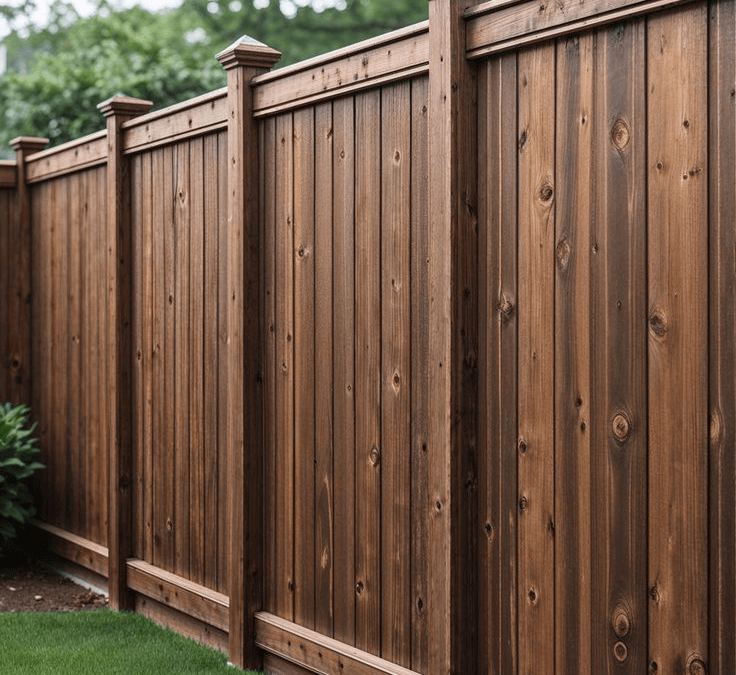
Your wood fence has seen better days. Maybe it’s leaning, the boards are rotting, or the gate won’t close properly. The good news? Most wood fence problems are easier to fix than you might think—and tackling them early can save you thousands on a full replacement.
The most common wood fence repairs include fixing rotted posts, replacing broken or warped boards, reattaching loose rails, straightening leaning sections, and repairing sagging gates. Most homeowners can complete these repairs in a weekend with basic tools. The key is identifying the root cause—usually moisture damage, ground movement, or natural wear—and addressing it before the problem spreads.
What Causes Wood Fences to Fail?
Understanding why your fence is failing helps you choose the right fix. In my experience repairing dozens of fences over the years, these are the culprits I see most often:
Moisture and rot – Wood absorbs water from rain, sprinklers, and ground contact. Without proper treatment, rot sets in and weakens structural integrity.
Ground movement – Frost heave, soil erosion, and settling cause posts to shift. This creates the telltale leaning fence.
Insect damage – Termites and carpenter ants love untreated wood. They can hollow out posts and rails from the inside.
UV exposure – Sunlight breaks down wood fibers over time. You’ll notice graying, cracking, and splintering.
Physical damage – Strong winds, fallen branches, and impact from lawn equipment all take their toll.
How Do I Know If My Fence Posts Are Rotted?
Rotted posts are the number one cause of fence failure. Here’s how to check yours:
Signs Your Posts Need Attention
- Visible soft spots or discoloration at ground level
- Fence leans in one direction
- Posts wobble when you push them
- Mushroom-like growth or white fuzzy patches near the base
- Probe test fails – a screwdriver easily penetrates the wood
The Screwdriver Test
This simple test takes 30 seconds per post:
- Grab a flathead screwdriver
- Probe the post at ground level and 2 inches below
- Press firmly into the wood
- Healthy wood resists penetration
- Rotted wood feels spongy and gives way easily
How Do I Fix a Leaning Wood Fence?
A leaning fence doesn’t always mean you need new posts. The repair method depends on what’s causing the lean.
Option 1: Use a Fence Post Mender (Best for Minor Leans)
Fence post menders are steel brackets that reinforce existing posts. They work great when the post is still solid above ground but has shifted at the base.
Steps:
- Dig around the post to expose the base
- Push the post back to plumb using a level
- Drive the metal mender spike into the ground beside the post
- Secure the post to the mender with screws
- Backfill and compact the soil
Cost: $15–30 per post
Time: 30–45 minutes per post
Option 2: Sister a New Post (Best for Partially Rotted Posts)
If the bottom is rotted but the top is solid, you can “sister” a new post alongside it.
Steps:
- Cut the rotted portion off the existing post
- Set a new pressure-treated post in concrete beside it
- Bolt the posts together using carriage bolts
- The new post carries the structural load
Cost: $30–50 per post
Time: 1–2 hours per post (plus concrete cure time)
Option 3: Full Post Replacement (Best for Severe Rot)
When more than 50% of the post is damaged, replacement is the only reliable fix.
Steps:
- Remove fence panels attached to the post
- Dig out the old post and concrete
- Set the new post in fresh concrete, 1/3 of total length underground
- Allow 24–48 hours for concrete to cure
- Reattach fence panels
Pro tip: Use pressure-treated posts rated for ground contact (look for “GC” or “Ground Contact” on the label).
How Do I Replace Broken Fence Boards?
Replacing individual boards is one of the easiest fence repairs. You’ll need a pry bar, drill, and replacement boards that match your existing fence.
Step-by-Step Board Replacement
- Remove the damaged board – Use a pry bar to gently separate it from the rails. Remove any nails or screws left behind.
- Measure twice – Check the length and width. Fence boards typically come in standard widths (3.5″, 5.5″, or 7.5″).
- Cut your replacement – Match the angle if your fence has decorative tops.
- Attach the new board – Use exterior-grade screws (not nails) for a stronger hold. Two screws per rail is standard.
- Stain or paint to match – This protects the wood and blends the repair.
Matching Your Existing Fence
Finding an exact match can be tricky with older fences. Here’s what to consider:
| Factor | What to Look For |
| Wood species | Cedar, pine, redwood, or spruce |
| Board profile | Dog-ear, flat-top, gothic, or french gothic |
| Width | Measure the exposed face |
| Thickness | Usually 5/8″ or 3/4″ |
| Weathering | New wood will look different until it ages |
Tip: Buy a few extra boards. They’ll weather alongside your fence and serve as perfect replacements later.
Why Is My Fence Gate Sagging?
Sagging gates are frustrating. They drag on the ground, won’t latch properly, and look terrible. Here’s what’s happening and how to fix it.
Common Causes of Gate Sag
- Loose hinges – Screws pull out of softened wood over time
- Hinge posts leaning – The whole gate frame shifts
- Gate frame racking – The rectangle becomes a parallelogram
- Weight of the gate – Solid wood gates are heavy
Quick Fix: Anti-Sag Gate Kit
Anti-sag kits use a cable and turnbuckle system to lift the sagging corner. They cost under $20 and install in 15 minutes.
Installation:
- Attach the corner bracket to the top hinge-side corner
- Attach the other bracket to the bottom latch-side corner
- Run the cable diagonally between them
- Tighten the turnbuckle until the gate is square
Permanent Fix: Reinforce the Gate Frame
For a more permanent solution, add a diagonal brace:
- Cut a 2×4 to fit diagonally from the top hinge corner to the bottom latch corner
- Screw it securely to the gate frame
- This creates a rigid triangle that resists racking
What’s the Best Way to Protect My Fence After Repairs?
Repairs are only half the job. Protecting your fence extends its life by years.
Recommended Maintenance Schedule
| Task | Frequency |
| Visual inspection | Every 3 months |
| Clean with mild soap | Annually |
| Apply water repellent | Every 2–3 years |
| Check for loose fasteners | Annually |
| Trim vegetation away from fence | As needed |
Choosing a Finish
Semi-transparent stain – Shows wood grain, moderate protection, needs reapplication every 2–3 years
Solid stain – Hides grain, better UV protection, lasts 3–5 years
Paint – Maximum protection but can peel; requires more prep for recoating
Water repellent preservative – Clear finish, good moisture protection, reapply every 1–2 years
When Should I Call a Professional?
Not every repair is a DIY project. Consider calling a professional when:
- Multiple posts need replacement (3 or more)
- The fence is on a steep slope
- You need to match complex architectural details
- The fence borders a property line (survey may be needed)
- Structural damage is extensive
- You don’t have the time or tools
Average professional repair costs:
- Single post replacement: $150–300
- Gate repair: $100–250
- Full section rebuild: $500–1,000+
Frequently Asked Questions About Wood Fence Repair
How long does a wood fence typically last?
A well-maintained wood fence lasts 15–20 years. Cedar and redwood can last 20–25 years with proper care. The biggest factor is moisture management and regular maintenance. Posts typically fail first because they’re in constant ground contact.
Can I repair a wood fence in winter?
Yes, but with some limitations. You can replace boards and make minor repairs in cold weather. However, setting new posts in concrete is challenging when the ground is frozen. If possible, wait for temperatures consistently above 40°F for concrete work.
How do I stop my wood fence from rotting?
Prevention is key. Use pressure-treated lumber rated for ground contact, apply water repellent annually, ensure proper drainage around posts, keep sprinklers from hitting the fence directly, and address damaged boards before rot spreads to healthy wood.
What’s the cheapest way to fix a broken fence?
For minor damage, patching and reinforcing is most economical. Use wood filler for small cracks, sister damaged posts rather than replacing them, and scavenge boards from a hidden section to repair visible areas. An anti-sag kit is the cheapest gate fix.
Should I use nails or screws for fence repairs?
Screws are better for repairs. They hold tighter, resist pulling out, and can be removed if adjustments are needed. Use exterior-grade screws (hot-dipped galvanized or stainless steel) that are long enough to penetrate the rail by at least 1.5 inches.
How do I know if I should repair or replace my entire fence?
Replace if more than 25% of the fence needs repair, the posts are failing throughout, the style is outdated and affects property value, or the repair cost exceeds 50% of replacement cost. Repair if damage is localized, posts are mostly sound, and the fence is under 15 years old.
Can I mix new wood with old wood on my fence?
Absolutely. It’s common and cost-effective. The new wood will weather and blend over time. To speed up matching, you can apply a wood brightener to old boards or a light gray stain to new boards. After one season, the difference becomes much less noticeable.
Summary: Taking Action on Your Fence Repairs
Wood fence repair doesn’t have to be intimidating. Start by identifying the problem—rotted posts, broken boards, or a sagging gate—then choose the repair method that matches the severity of the damage. Most homeowners can handle these fixes over a weekend with basic tools and materials from the local hardware store.
The most important thing? Don’t wait. Small problems become big ones quickly when moisture gets involved. A $30 repair today could save you a $3,000 replacement next year.
If your fence needs more than a few repairs, or you’re not comfortable tackling the job yourself, reach out to a local fencing contractor for a free estimate. Sometimes the peace of mind is worth the investment.
Have questions about your specific fence situation? Drop them in the comments below—I’m happy to help you figure out the best approach.